
Kom Ombo
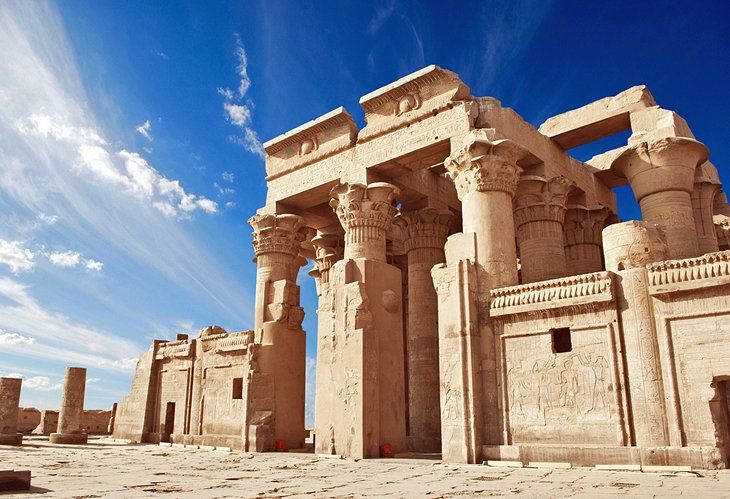
Kom Ombo Temple: A Complete Guide to Egypt’s Unique Double Temple
Introduction to Kom Ombo Temple
Kom Ombo Temple is one of the most fascinating and architecturally distinctive temples in ancient Egypt, celebrated for its rare double design, rich symbolism, and strategic location along the Nile River in Upper Egypt. Situated approximately 40 kilometers north of Aswan, the temple rises on a natural elevation overlooking a dramatic bend in the Nile, a position that was both spiritually meaningful and practically important in antiquity. Unlike most Egyptian temples, which were devoted to a single god or divine triad, Kom Ombo Temple was uniquely dedicated to two gods at the same time, resulting in a perfectly symmetrical structure divided into two parallel halves. This unusual design reflects ancient Egyptian beliefs about balance, duality, and harmony, concepts that were central to their understanding of the universe. Today, Kom Ombo Temple stands as a major highlight included in many Egypt tour packages, especially Nile cruise itineraries that combine culture, history, and scenic river journeys, making it a must-see destination for travelers, scholars, and history enthusiasts alike.
Historical Background of Kom Ombo Temple
The construction of Kom Ombo Temple began during the Ptolemaic period, specifically under the reign of Ptolemy VI Philometor in the second century BCE, and continued through the rule of later Ptolemaic kings. Additional decorations and architectural elements were added during the Roman period, particularly under emperors such as Augustus and Tiberius, giving the temple a layered historical character that reflects centuries of religious continuity and adaptation. Although the Ptolemies were of Greek origin, they adopted and supported traditional Egyptian religious practices to legitimize their rule, and Kom Ombo Temple is a clear example of this cultural blending. The site itself was sacred long before the Ptolemaic period, suggesting that earlier temples or shrines once stood there, although little physical evidence of those earlier structures has survived. Over time, Kom Ombo became an important religious, medical, and administrative center for the surrounding region.
The Unique Double Design of Kom Ombo Temple
What truly sets Kom Ombo Temple apart from all other temples in Egypt is its double layout, which mirrors itself along a central axis. The entire complex is divided into two identical halves, each with its own entrance, courtyard, hypostyle hall, sanctuaries, and chapels. One side of the temple was dedicated to Sobek, the crocodile-headed god, while the other side honored Horus the Elder, also known as Haroeris. This architectural symmetry was not merely decorative but deeply symbolic, representing the ancient Egyptian belief that opposing forces must coexist in balance to maintain order in the universe. Every architectural element, from the columns to the reliefs, was carefully planned to ensure equality between the two gods, making Kom Ombo a physical expression of harmony and duality.
Gods of Kom Ombo Temple: Sobek and Horus the Elder
Sobek was a powerful and complex deity associated with crocodiles, fertility, military strength, and the life-giving waters of the Nile. As a god who embodied both danger and protection, Sobek was especially revered in regions where crocodiles posed a real threat to daily life. Worshiping Sobek was believed to appease these dangerous animals and ensure agricultural prosperity. On the other side of the temple, Horus the Elder represented kingship, healing, the sky, and cosmic order. He was closely associated with the protection of the pharaoh and the restoration of balance after chaos. The dual worship of Sobek and Horus at Kom Ombo reflects the ancient Egyptian understanding that life required both power and healing, fear and reassurance, destruction and renewal.
Architectural Features of Kom Ombo Temple
Kom Ombo Temple follows the traditional layout of Egyptian temples while incorporating its distinctive dual structure. The temple originally featured a grand pylon entrance, much of which has been lost over time, leading into an open courtyard where public ceremonies and festivals took place. Beyond the courtyard lies the hypostyle hall, supported by columns richly decorated with reliefs of gods, kings, and ritual scenes. These carvings are notable for their detail and artistic quality, offering valuable insights into religious practices during the Greco-Roman period. Deeper within the temple are the inner halls and sanctuaries, which were the most sacred spaces, accessible only to priests and the pharaoh. The careful progression from open, public spaces to dark, restricted chambers reflects the ancient Egyptian concept of approaching the divine gradually and respectfully.
Medical Knowledge and Healing at Kom Ombo Temple
One of the most remarkable aspects of Kom Ombo Temple is its association with medicine and healing. The temple walls feature some of the most detailed depictions of ancient medical instruments ever found in Egypt, including scalpels, forceps, probes, and surgical knives. These reliefs suggest that Kom Ombo functioned as a healing center where priests practiced medical treatments alongside religious rituals. Pilgrims from different regions likely traveled to the temple seeking cures, blessings, and divine intervention, particularly under the protection of Horus the Elder, who was closely linked to healing. This combination of religion and medicine highlights the advanced understanding ancient Egyptians had of the human body and the spiritual dimensions of health.
The Sacred Crocodiles of Kom Ombo
Crocodiles played a central role in the religious life of Kom Ombo due to their association with Sobek. The temple complex once included sacred pools where crocodiles were kept, fed, and worshiped as living manifestations of the god. When these sacred animals died, they were carefully mummified and buried in special cemeteries nearby, a practice that demonstrates the deep respect ancient Egyptians had for animals connected to divine power. Today, many of these mummified crocodiles are displayed in the Crocodile Museum adjacent to the temple, offering visitors a unique glimpse into ancient animal worship and the rituals associated with Sobek.
Roman Influence and Later Additions
During the Roman period, Kom Ombo Temple continued to be an active religious site, with Roman emperors contributing new reliefs, inscriptions, and structures. One significant addition was the mammisi, or birth house, which celebrated divine birth and renewal and reflected the Roman adaptation of Egyptian religious concepts. These later elements illustrate how Kom Ombo remained relevant across different political eras, serving as a bridge between traditional Egyptian beliefs and Roman imperial ideology. Despite foreign rule, the core religious identity of the temple remained firmly rooted in ancient Egyptian traditions.
Decline, Damage, and Conservation of Kom Ombo Temple
Like many ancient monuments, Kom Ombo Temple suffered from centuries of neglect, natural erosion, earthquakes, and human activity. Its proximity to the Nile exposed it to flooding and water damage, while many of its stones were removed for use in later buildings during the medieval and Ottoman periods. In modern times, archaeological excavations and conservation efforts have helped stabilize and preserve the temple, particularly after the construction of the Aswan High Dam reduced seasonal flooding. These efforts have allowed Kom Ombo Temple to survive as an important historical and cultural landmark.
Kom Ombo Temple Today: Tourism and Cultural Importance
Today, Kom Ombo Temple is one of the most popular stops on Nile cruises and a key attraction featured in a wide range of Egypt tour packages, from luxury river cruises to customized cultural and archaeological tours. Travelers from around the world are drawn to its dramatic riverside location, unique double design, and well-preserved reliefs that tell stories of gods, medicine, and kingship. The temple is especially striking at sunset, when the golden light enhances the carvings and creates a powerful atmosphere that connects visitors with the ancient past. Beyond tourism, Kom Ombo remains an essential site for archaeological research and education, offering valuable insights into religion, medicine, and daily life in ancient Egypt. Its inclusion in modern Egypt tour packages highlights its lasting importance as both a cultural landmark and a living link between ancient civilization and contemporary travel experiences.